Shelter With Sense: The Cave Test for Roughing It Without Ruining It

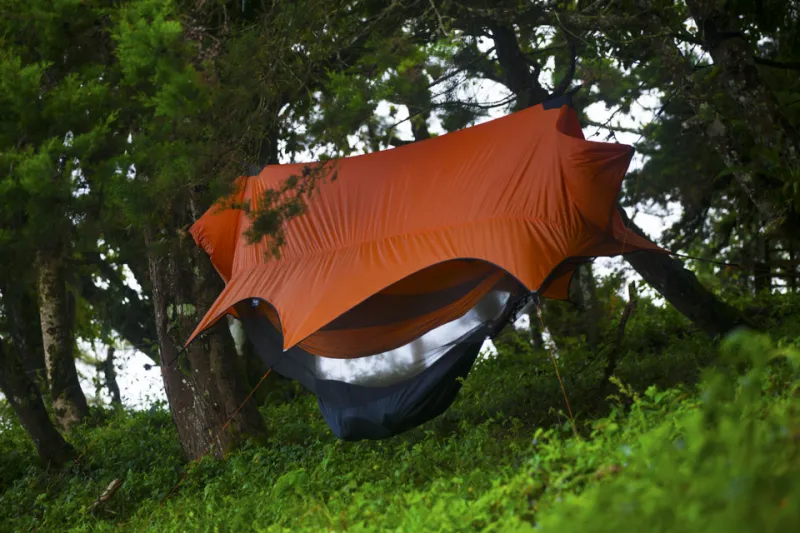
Photo: low impact wild camping tent Scottish Highlands bothy, via i.pinimg.com
Roughing it has an image problem. Somewhere along the line, sleeping wild became a test of masculinity, and the person who suffers most is assumed to have won. Cold, wet, under-sheltered and slightly miserable is apparently character-building. But there is a difference between discomfort and damage, and British woodlands and uplands are not a stage for either.
The Bushcraft Cave is not an instruction to crawl into a hole and grin through hypothermia. The cave is a useful metaphor: a shelter is a tool, not a personality test. Real cave logic is about reading the place, knowing your limits and choosing the least damaging option that keeps you safe.
The myth of the hard man's bivvy
You see it in the videos: a bloke in a damp wood, a knife the size of his forearm, and a shelter made from freshly cut saplings. The message is that comfort is weakness and kit is cheating. But chopping live wood, digging drainage trenches and building a new fire ring is not bushcraft. It is a small demolition project with a nice backdrop.
Honest risk assessment is a skill. Admitting that you are cold, late, lost or under-equipped is a skill too. The outdoors does not care about your ego. It cares about whether your shelter sheds water, whether your body stays warm and whether the ground beneath you is stable. A tent that goes up quickly in a gale is not less wild than a leaky lean-to. It is often the smarter choice.
What a cave actually teaches
A cave is not automatically shelter. Some overhangs funnel water. Some are loose. Some are used by animals, or sit above a drop you cannot see in the dark. A cave can be a gift in an emergency and a trap if you choose it for romance rather than reason. The lesson is not that natural shelter is bad. The lesson is that shelter must be read, not assumed.
That goes for tents and bothies too. A tent pitched on fragile ground, left dirty or abandoned, is not low-impact just because it is portable. A bothy filled with rubbish and smoke is not a refuge; it is a shared space that someone else has to rescue. The cave test is about consequences.
The cave test: five questions before you settle
-
Is it allowed? Check access rights, landowner permission and local bylaws. Wild camping is legal in most of Scotland, but in England and Wales it is limited and often permission-based. Dartmoor has its own rules. Do not let a beautiful spot convince you that the law has changed.
-
Is it safe? Look up, look down and look around. Rockfall, flash flooding, dead standing trees, exposed ridges and deep bog are all reasons to move on. Ask what the weather is doing overnight, not just now. Ask whether you could get out in the dark.
-
What will it cost the place? Choose durable ground. Do not dig trenches, cut live wood, strip bark or build new fire scars. If the site cannot take your visit without visible damage, it is the wrong site.
-
Do I have the skill and kit to be there? A natural shelter in an emergency is one thing. A planned night in a leaky lean-to with no sleeping mat is another. Know your abilities and carry the gear that makes the difference between a story and an incident.
-
What is my exit plan? Have a bail-out route, a time to turn back and someone who knows where you are. The wild is not more authentic because you have no plan B.
Natural shelter, tent or bothy
A natural shelter makes sense in an emergency, or with permission, when you can use it without altering it. It is not a licence to camp where camping is not allowed. Do not cut live wood, dig trenches or rearrange habitat to make a den. If you use a rock overhang, leave the stones, moss and animal spaces alone.
A tent is often the low-impact choice for a planned trip. It concentrates your impact on a small patch, keeps you warm and dry, and lets you leave quickly. Pitch on durable ground, arrive late and leave early where that is the local expectation, and pack out everything, including food scraps and anything that did not come from the site.
A bothy is a shared shelter, not a free hotel. Follow the bothy code: keep it clean, respect other users, carry out rubbish, and do not light a fire unless it is safe and allowed. Leave it better than you found it, or at least no worse. The Mountain Bothies Association and local estates do not owe anyone a dry night.
Low-impact is not soft
There is a strange idea that leave-no-trace camping is for people who are not serious. In reality, it takes more skill to camp lightly than to hack a shelter out of the woods and call it survival. It takes discipline to choose the right site, to carry the right kit, to keep a fire small or skip it entirely, and to walk away without a trace.
Roughing it should mean accepting some discomfort. It should not mean ruining the place to prove you can cope. The cave test is simple: if your night out leaves a scar, a mess or a risk that someone else has to manage, you have not been wild. You have just been careless with a nice view.
Pack out the ego. Take the shelter that keeps you safe and the place intact. That is cave logic worth keeping.