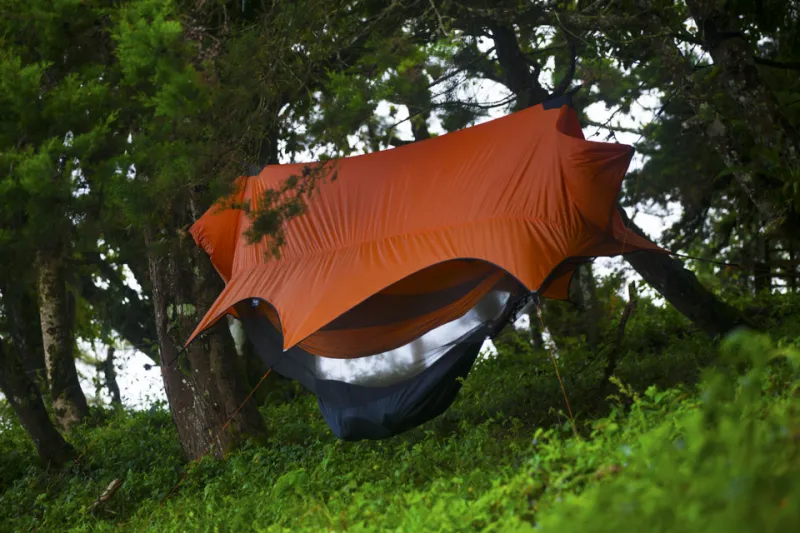
Stone Roofs and Cold Truths: How to Read a British Rock Overhang Before You Sleep Under It
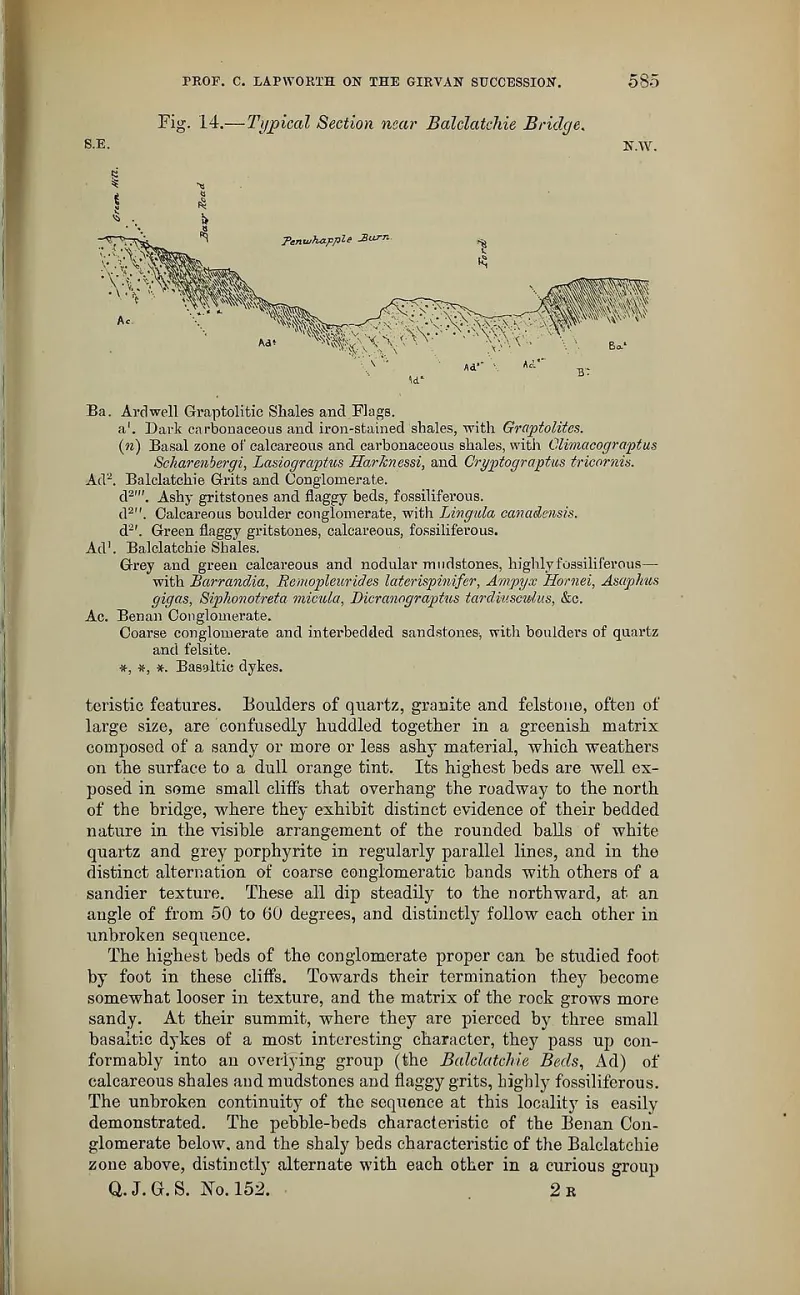
Photo: Geological Society of London, Public domain, via Wikimedia Commons
Britain is unusually well supplied with natural roofs. Granite tors on Dartmoor, gritstone edges in the Peak, the hollowed sandstone of the Weald, sea caves bitten out of Scottish and Cornish coastlines — walk far enough and you'll find somewhere a person could, at a push, spend a night. People have done exactly that for thousands of years. Some of those shelters still carry the soot to prove it.
That history is seductive, and it is also a trap. An overhang is not a bothy. It's a piece of geology mid-process, and the process is slow, quiet and occasionally violent. Learning to read one properly is one of the most useful skills in the British outdoors — not because you'll often need to sleep in one, but because the same reading applies to every pitch you'll ever choose.
Shelter that is still being made
The first thing to understand is that a rock overhang is not a finished structure. It's a snapshot. Frost prises flakes off it in winter, water dissolves the cement between its grains, roots lever slabs apart, and gravity waits.
Stand back and look up before you look in. A roof that's a single clean span of sound rock is one thing; a roof made of stacked slabs with soil and grass in the cracks is another. Gritstone in particular splits along bedding planes, and a wet autumn followed by a hard frost is the classic recipe for a fresh fall. Look at the floor. If there's a scatter of angular fragments directly beneath the roof, that's not clutter — that's a recent delivery. Small chips are a warning, not decoration.
Wet streaks down the face tell you where water runs, which tells you where the rock is weakest. Dark, damp patches that never dry suggest seepage from above and long-term instability. Sandstone — the soft stuff of the Weald and parts of the Wye Valley — can be crumbly enough to dig a hand into, and anything you can dig a hand into should not be over your head. Chalk, obviously, is out.
And always look at what's above the overhang, not just the overhang itself. A loose boulder sitting on a ledge ten metres up is not part of the shelter; it's a threat with a delay fuse.
Water is the more likely problem
Rockfall is dramatic. Water is what actually ruins the night. British weather delivers rain sideways, and an overhang with a generous roof and a wide-open aspect will still get you wet once the wind swings round.
Check the angle. A shallow overhang shelters from one direction only, and in this country that direction will change by three in the morning. Look at the ground beneath: dry, dusty earth and rabbit droppings mean it stays dry most of the time; moss, algae and damp leaf litter mean it doesn't.
Gullies and stream beds are the other trap. Any hollow that collects water from a large catchment above it can turn from dry to dangerous in twenty minutes during a summer thunderstorm or a long winter soak. That applies inland as much as on the coast.
Sea caves need their own discipline. Tides here are large — six metres and more in the Bristol Channel and parts of the Scottish west coast — and a cave that's a comfortable scramble at low water can be a death trap at high. Add swell and an onshore wind and the usable window shrinks fast. Know the tide table for the exact location, not the nearest big town, and know your escape route in the dark.
Permission, protection and the law
A rock overhang can feel like nobody's business. It usually isn't.
In England and Wales, the right to roam under the Countryside and Rights of Access Act covers open access land for walking, but wild camping needs the landowner's permission — with Dartmoor's permitted camping areas being the long-standing exception. Scotland is different again: the Outdoor Access Code allows responsible wild camping on most unenclosed land, but 'responsible' is doing a lot of work in that sentence.
Then there's the small print that catches people out. Many overhangs sit within Sites of Special Scientific Interest. Some are Scheduled Monuments with archaeology in the floor deposit. Crags and caves are frequently seasonal bat roosts, and disturbing them is an offence. Some faces are under voluntary climbing or nesting restrictions. And large swathes of Dartmoor and Salisbury Plain are live military ranges.
None of this means you can't use these places. It means you check first, and it means you accept a no.
Being warm is a separate job
Newcomers assume the roof does the warmth. It doesn't. Shelter stops the wind and the rain; insulation keeps you alive. In a British overhang in February, the rock will be colder than the air and the floor will suck heat out of you through the night.
A decent mat matters more than a fancy sleeping bag. A bivvy bag or a light tarp beats an open sleeping bag every time in a damp cave. Get out of wet clothing before you get into anything else, eat something substantial, and keep a flask of hot drink where you can reach it without leaving your bag. Cold, wet and tired is the trio that causes trouble, and a rock roof does nothing about two of the three.
The damage that closes the door
The overhangs that get ruined are almost always the accessible, photogenic ones. Soot-blackened roofs from fires that spalled the rock. Rings of stones dragged out of the floor. Walls built for windbreaks and left behind. Toilet paper blooms behind the biggest boulder.
The fix is unglamorous. No fires in or under overhangs — the soot is permanent and the heat cracks the rock. Don't move stones to build anything. Don't dig, don't clear vegetation, don't rearrange the floor to make a flat spot; sleep on what's there or move on. Carry out everything, including the things you think are biodegradable. Bury human waste properly, well away from the shelter and at least thirty metres from any water.
And keep the footprint small in the obvious ways: a quiet arrival, a small group, an early start. The best night in a cave is one that nobody, including the next walker, can tell happened.
The lesson worth taking home
Most of us will sleep under rock a handful of times, if that. But the habit of standing back, looking up, reading the ground, checking the water line and asking who owns the place is the same habit that makes a tarp pitch, a woodland bivvy or a high moorland camp a good decision rather than a lucky one. Britain's overhangs have been teaching that lesson for a very long time. It's worth listening.