A Handful Is a Meal: Foraging British Woods Without Clearing the Shelf
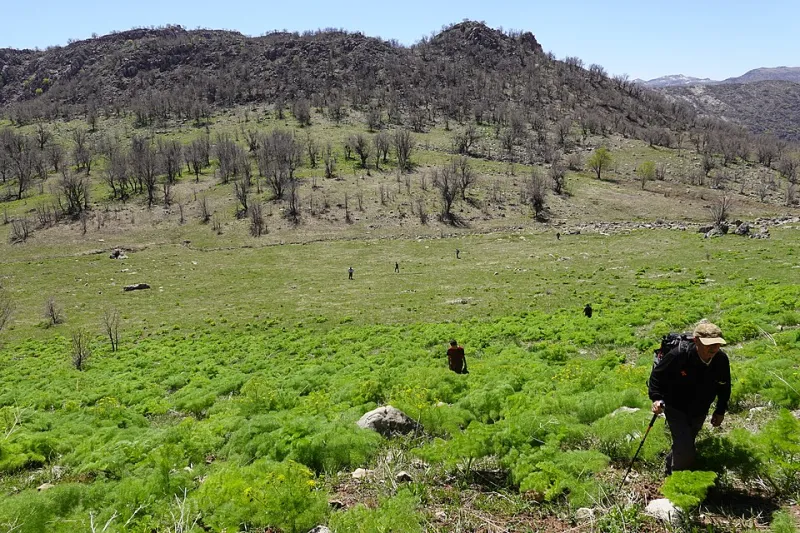
Photo: Khoshhat, CC BY 4.0, via Wikimedia Commons
Foraging has a way of turning a quiet woodland walk into a treasure hunt. One minute you're admiring a bank of wild garlic; the next you're calculating how many carrier bags you could fill. That's the moment to slow down. A weekend camp doesn't need a pantry raid. It needs a handful of leaves, a few berries, maybe a couple of mushrooms you can identify with total certainty—and a wood that looks much the same when you leave as it did when you arrived.
This isn't about being precious. It's about being a good guest. The restraint code below is the one I use on British weekend trips: small picks, legal picks, and a simple habit of leaving far more than I take.
The law bit: access is not a harvest licence
In England and Wales, the Theft Act 1968 means picking wild fruit, flowers, foliage or fungi for personal, non-commercial use is generally not theft—provided you're not uprooting the plant. That's a narrow allowance, not a free-for-all. Uprooting anything needs the landowner's consent. Protected species are off-limits under the Wildlife and Countryside Act. And bylaws on National Trust, Forestry England, Ministry of Defence, reservoir and nature-reserve land can ban picking outright.
Scotland has its own access code and different rules; commercial picking is a different matter again. Open-access land under the Countryside and Rights of Way Act is for walking, not a licence to harvest. If a site is a Site of Special Scientific Interest, assume no. If you're unsure, ask the landowner or don't pick. That's the whole legal test in one line: permission first, certainty second, appetite last.
Take one, leave ten
The routine is simple. For every stem, leaf or berry you take, leave at least ten. Not ten in the whole wood—ten within sight, so the patch still looks generous when you step back. Pick from the middle of an abundant stand, not the lonely edge. Leave the seed heads, the flowers, the leader shoots and the roots. Never strip a branch, a clump or a hedgerow row.
Use your thumb and forefinger for soft leaves, or a sharp knife for stems. Carry a cotton or paper bag rather than a plastic sack that will sweat and crush. Pick only what you'll eat that day, and pick it cleanly: no trampling, no snapping, no tearing. If a patch looks picked-over, move on. A forager who leaves a visible scar has taken too much, full stop.
What a weekend actually needs
A bushcraft lunch is not a shopping trip. Treat foraged food as a garnish, a flavour, a small pleasure—not the calorie base of your trip. Bring your staples. Then add what the season offers.
Spring is nettle and wild garlic country. Take the top two pairs of nettle leaves from a dense patch and leave the root and lower stems. Take one leaf from a wild garlic clump, not the whole bulb, and leave the flowers to set seed. Wood sorrel and chickweed are fine in small handfuls. Leave anything rare, anything you can't identify, and anything growing where dogs, roads or spray drift can reach it.
Summer brings elderflower, bilberry, raspberry and the first blackberries. Pick a few elderflower heads from an abundant bush and leave plenty to become berries. Hand-pick bilberries and leave the unripe fruit. Take only ripe blackberries, and leave the high ones for birds. Late summer is hedgerow heaven, but it's also when every picker in the county has the same idea—so take less than you think you need.
Autumn is hazelnut, crab apple, sloe and rosehip time. Take a modest share of nuts and leave plenty for squirrels and jays. Pick sloes and rosehips after the first cold snap if you can, but don't strip the bush. Mushrooms deserve their own paragraph: if you cannot identify a species with total certainty, photograph it and leave it. Never eat anything you're not 100 per cent sure of, and never pick a mushroom just to tick it off.
Winter is slim. Rosehips, sloes and a few winter greens are about the limit. Leave bark, roots and birch sap alone. Tapping a tree is not a casual camp craft, and stripping bark can kill it. A hungry wood is not a harvest opportunity.
The camp-craft bit
Keep your harvest small and your handling cleaner than your conscience. Don't pick near busy paths, dog routes, farmland edges or roadsides. Wash your hands before eating. Keep foraged food separate from raw meat and dirty kit. Don't carry seeds or roots from one site to another—invasive species are a real problem, and muddy boots are a great delivery service.
Process your pick at camp, not in the wood. A handful of nettles becomes soup; wild garlic goes into butter or a simple flatbread; berries go straight into a billy can or your mouth. Compost scraps well away from your pitch, or pack them out. Leave the wood tidier than you found it.
A field card for the pocket
Before you pick, ask five questions. Is it abundant here? Is it legal on this land? Is it clean and safe? Do I actually need it? Will this patch look fine tomorrow? If any answer is shaky, leave it. That's the code. Not a slogan, just a habit.
The best foragers I know come back with a handful and a wood that looks untouched from two paces away. That's the standard. Pick a little, leave a lot—and let the next camp find the same generosity you did.