Six Feet of Lawn, All the Skills You Need: A Back-Garden Bushcraft Syllabus
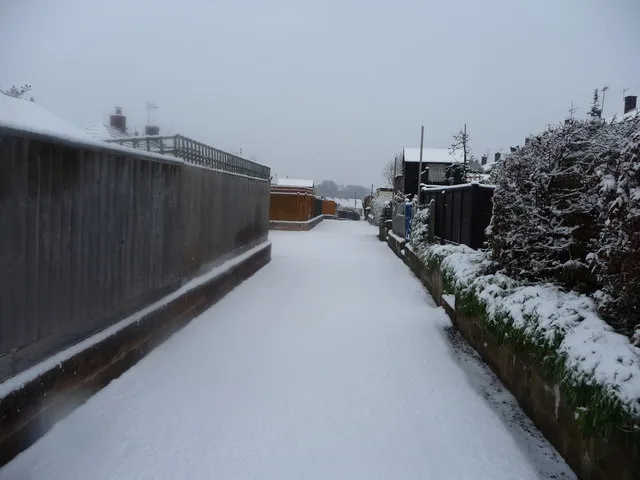
Photo: Lewis Clarke, CC BY-SA 2.0, via Wikimedia Commons
There's a particular kind of gloom that sets in on a Friday when the weather forecast is biblical and the nearest decent wood is ninety minutes away. The temptation is to write the weekend off, watch someone else build a shelter on YouTube and promise yourself you'll be sharper come spring. You won't be. Skills fade quietly, and the person who turns up at the campsite in March having done nothing since October is the person who spends forty minutes failing to get a tarp taut.
The fix is embarrassingly close to hand. Britain is a nation of small gardens, yards, balconies and shared back greens, and every one of them is a legitimate training ground. Nobody is watching. The stakes are zero. That's the ideal condition for practice, because you can be bad at things in private for as long as it takes.
The Tarp Doesn't Care Where It Hangs
In a wood, shelter-building is partly a game of finding three convenient trees and threading a ridgeline between them. It teaches you less than you think, because the wood does half the work.
A garden forces the issue. You've got a fence post, a rotary washing line, a shed corner and a gate, and somehow you have to make a 3x3 tarp behave. Start with a simple ridgeline between two anchors and pitch the tarp as an A-frame low to the ground, pegging the guys at a shallow angle. Time yourself. Then do it again with gloves on in the rain, which is the only honest test.
Once that's second nature, work through the configurations: lean-to against the fence, a low wind-shedding wedge for a forecast gale, and a raised porch arrangement so you can sit up without your head touching nylon. Five pitches, each one weather-tight, no sagging panels, no flapping corners. On a balcony you'll need clamps or lashings to the railing rather than pegs, and you'll learn fast about wind funnelling between buildings, which is a genuinely useful thing to understand before you pitch on an exposed ridge.
Knots Are a Kitchen-Doorway Skill
Ten minutes a night, that's all. A bowline, a clove hitch, a taut-line hitch, a timber hitch, two half hitches and a trucker's hitch for putting real tension into a ridgeline. Tie them round a chair leg, a broom handle, a bag of compost. Then tie them in the dark. Then tie them in the cold with numb fingers, which is when you'll actually need them.
The goal isn't knot-collecting. It's being able to look at a problem, a loose tarp corner, a sagging line, a bundle of poles, and reach for the right hitch without thinking. That only comes from repetition somewhere warm and boring.
Fire Craft Is Mostly Preparation
Here's the quiet truth: you don't need to light a fire to get better at lighting fires. What you need is to make a great many feather sticks.
Get a decent knife, sit on a step with a chopping board or an offcut of plank, and practise shavings until you can produce curls fine enough to take a spark, then three sizes of kindling, pencil-thick, finger-thick and thumb-thick. Use garden prunings, offcuts from a DIY shop, or a bag of kiln-dried logs split down small. Hazel from a coppiced hedge is lovely if you have it.
Then practise ignition. A ferro rod struck into a tin lid, cotton wool smeared with petroleum jelly, a bit of birch bark you've saved. Do it under the porch on a wet afternoon, and do it badly, and learn what damp does to your technique. That's the lesson you can't get from a dry day.
If you do want a fire at home, use a raised fire bowl or chiminea, burn small and hot, and remember your neighbours' washing. Smoke is a courtesy issue long before it's a safety one.
Learn Three Plants Properly
Back-garden botany gets a bad press. It shouldn't. The verges, hedges and weed patches around a suburban street hold a genuinely useful set of species for a beginner to cut their teeth on: nettle, cleavers, herb robert, ground ivy, cow parsley and its sinister lookalikes.
Which brings up the important bit. Learn giant hogweed before you learn anything else, because its sap plus sunlight equals serious blisters, and it grows along rivers and railway lines people walk every week. Learn hemlock water dropwort too, the most poisonous plant in the country, and be able to tell it apart from the umbellifers you might pick.
Better still, grow something. A pot of sorrel, a rosemary bush, wild strawberries in a trough. Watching a plant move through March, June and October teaches identification in a way that photographs never will. Use an app to get you to the family, then confirm it in a book. Never eat anything you haven't identified twice.
Leave No Trace Starts at Home
Treat your six feet of lawn as a site and the habits become automatic. No fire scars, ever: use a tray, and if you're being careful, lift the turf and put it back. Sweep the patio. Count the grass the day after and see how long it takes to bounce back, because that's a lesson in recovery times you'll carry to a campsite. Pack out every scrap of tinder, including the charred bit that always gets left behind.
It sounds fussy. It isn't. It's just rehearsing the behaviour you want to default to when nobody's checking.
The Saturday Night Test
Once a month, with permission and a decent sleeping bag, sleep out under your own tarp. Make tea, read by head torch, discover at 2am that the dog wants in and that your groundsheet has a puddle in the corner. Learn how your kit behaves at four degrees.
The dawn chorus will be a bin lorry and a paper round. That's fine. The wood is the reward; the garden is the classroom. Use it.